The Longer Scoreboard
Building a sustainable creative career
I listened to Robert Rodriguez talk about making movies recently and, naturally, came away thinking about something other than the movies.
Everybody knows the El Mariachi story, or some version of it. Made for almost no money. Did practically everything himself. Took it to Sundance. Hollywood called. Independent filmmakers everywhere looked at their credit cards and thought: apparently this is possible.
It is a terrific story. It is also a dangerous one, because terrific stories become lessons, and the lesson usually gets simplified down to: Rodriguez made a feature for seven thousand dollars, why can’t you?
I don’t think that’s the lesson. That movie was thirty-five years ago. Production has changed. Distribution has changed. Audiences have changed. Seven thousand dollars has changed. What interested me was what he did after the cheap movie.
He learned to operate the camera, because the camera stood between him and the movie. Learned editing. Learned sound. Got into digital back when much of the business considered digital something you did if you couldn’t afford the real thing. Built a studio on thirty acres in Austin. Accumulated equipment, props, sets, processes, people, knowledge. And now he’s thinking seriously about financing, because eventually financing became the next thing standing between the idea and the finished movie.
There’s a pattern in that list, and once I saw it I couldn’t stop seeing it. Rodriguez wasn’t just making movies. He was building the thing that made the movies possible.
That’s different. And probably more important than the seven thousand dollars.
The Problem With Projects
Creative people love projects. Not while you’re doing them. While you’re doing them they’re miserable. But conceptually they’re wonderful, because they’re finite. A film. A book. A podcast. A record. You know what the thing is.
Then you try to make it. Money. People. Equipment. Locations. Time, which turns out to secretly be money. Somebody to help people find the thing once it’s finished. You need all of it at roughly the same moment, and somehow you get it, and the project gets made, and everybody congratulates everybody, and then everybody goes home.
And now you have another idea.
So you start over. Money. People. Equipment. Locations. Time. Distribution. Audience. Again.
We’ve gotten very good at romanticizing this. Every production is its own adventure. Every crew is a family. Every project begins from nothing, and there’s something noble in that, apparently.
All fine. But if every project genuinely begins from nothing, you don’t have a creative enterprise. You have recurring amnesia.
Some of it is inherited. The film business is organized around temporary organisms. A company appears. People assemble. Equipment arrives. Everybody works like hell. The movie ends. The organism dies. For a studio picture that’s reasonable enough. But independent filmmakers have a strange habit of imitating the production architecture of organizations with a hundred million dollars, and then acting shocked when it’s expensive.
Somebody tells us how a movie is properly made.
That sentence alone should make you nervous. Properly according to whom? At what budget? For what kind of movie? In what year?
What Is Left When the Thing Is Over?
We’ve been chewing on this at Griffyn.Co. We started using the phrase build work that compounds. Not because we came up with it in a strategy meeting, but because we noticed our own projects behaving in ways we hadn’t planned for.
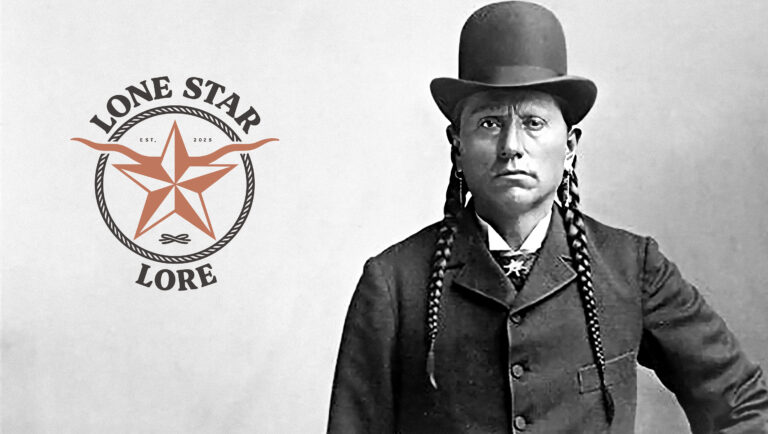
Lone Star Lore began as a podcast. That was the whole idea. Tell Texas history stories. Do it well. Joleene Snider writes it. That part came fast (for us, not for her). What took longer was getting her voice involved. She had no interest in being recorded, and for a while we couldn’t find anyone who could read her own words back in her own cadence and have it sound like anything but a stranger doing an impression of her. It was her daughter, in the end, who talked her into just reading it herself. That’s the whole spine of the show now. It almost didn’t happen for reasons that had nothing to do with Texas history.
One episode needed a historian. That historian led to another. Those conversations turned into a relationship with Texas State, the Department of History, and the Center for the Study of the Southwest. That turned into public programming. The research started turning into material we could use elsewhere. The credibility of the work helped us apply for a grant. Humanities Texas said yes, the show’s first major grant, awarded to Bodhi House Media, the nonprofit that can apply for things Griffyn.Co legally can’t. That grant expanded the work. And the accumulated research and relationships has now led us into creating an entire series within the series – Cotton, Cattle, and Oil – which was nowhere on any whiteboard when we started, because there was no whiteboard. There was a podcast and a woman who didn’t want to be recorded.
But the podcast left things behind. That’s the part I’m interested in.
A project ends. What survives it? An audience, maybe. Research. A relationship. A camera you learned to use, or already owned and finally learned. An editor you trust. A workflow. Somebody who saw the work and called about something else entirely. A university that becomes a partner. An interview that becomes an archive.
Nobody gets into filmmaking because they’re passionate about any of that. “I’ve always dreamed of reusable workflows” is not why anybody moves to Los Angeles, or in 2026, to Austin. But it’s why some people get to make the second thing. And the fifth. And the twentieth.
Rodriguez didn’t wake up one Tuesday with thirty acres of sets and costumes and people who already understand how he works. The first movie created the conditions for the second. The second left something useful for the third. Eventually the residue of all those productions became an ecosystem.
Maybe You Don’t Need More Money
Careful, now. This is the section where somebody decides I’m arguing filmmakers shouldn’t pay people. I’m not. Pay people, always, if you can. Good people are expensive and they should be. Locations cost money. Insurance costs money. Postproduction costs money. Feeding twelve human beings somehow costs roughly the gross national product of Luxembourg.
Movies cost money.
But there are two very different sentences, and they can look identical from across the room:
We don’t have enough money to execute this process.
This process costs more money than it should.
When something gets prohibitively expensive, the first instinct is to go find more money. Another grant application, another investor call, another campaign. Sometimes that’s the right move. But before that: why does it cost this much?
Maybe the answer is completely legitimate. Great, go find the money. But maybe you’re paying for handoffs that don’t need to happen. Maybe three people are translating an idea that could’ve been said directly to the person who needed to hear it. Maybe you’re renting, over and over, something that should’ve been bought a long time ago. Maybe the schedule is that long because that’s how schedules usually look.
A bigger budget is not automatically a more ambitious idea. Sometimes it’s just a more expensive system for doing the same thing. And money you don’t have to spend buys something specific.
Freedom.
Learn Enough To Be Dangerous
This may be the Rodriguez idea I like most. Creative people should get technical. Not technicians, technical. There’s a difference.
I don’t need to become the finest colorist in Texas. Good news for the colorists of Texas. But I should understand color well enough to say what I want, recognize what’s possible, notice what’s going wrong, and know when the person next to me knows more than I do, which, honestly, is most of the time, on most subjects, with most of the people we choose to work with. Choose being the operative word.
Same with camera. Sound. Editing. Distribution. Contracts. Grant language. Financing. AI.
“Somebody else handles that” may be the most expensive sentence in the creative vocabulary. Sometimes somebody else absolutely should handle it. But you should know what they’re handling, or you aren’t collaborating with them. You’re just ridding yourself of the responsibility.
Every mysterious locked door you learn enough about becomes an ordinary door. Ordinary doors are much easier to walk through when you’re in a hurry, which in this business is always.
The Speed of Thought
Rodriguez has a phrase I love: moving at the speed of thought.
We spend a tremendous amount of creative work trying to describe things that don’t exist yet, which is ridiculous when you say it out loud. The whole movie is perfectly clear in your head. Then you try to describe it.
No, darker than that. Not dark dark. More lonely. But warm.
They nod. You’ve accomplished nothing. Three weeks pass. Somebody shows you what they thought you meant.
So make something instead. Shoot the test. Cut the rough version. Record scratch narration. Build the temp score. Generate the reference frame. Make the ugly version.
Now we can talk.
This is where AI has become useful for us. Not as an idea machine, as a translation machine. There are much larger arguments to have about AI and they should be had elsewhere by people better qualified than me. On a practical level I keep coming back to one narrow use: get the thing out of your head. I don’t need the machine to have the idea. I had the idea. I need help getting everyone else standing inside it with me.
Independent Does Not Mean Alone
There’s a stupid version of everything, and the stupid version of self-sufficiency is that you do it all yourself.
Some of the most important people in our work are important precisely because they bring what we don’t have. An editor notices what you’ve stopped seeing. A producer asks how, exactly, you plan to pay for the brilliant idea you introduced three days before the shoot, and doesn’t let you leave the room until you have an answer. All useful. Often unpleasant. Still useful.
Collaboration means: this person makes the thing better.
Dependency means: without this person, this institution, this permission, there is no thing at all.
Build enough capability that you choose collaborators for what they add, not because the whole enterprise stops the second one of them stops returning your calls.
Use What You’ve Got
When Rodriguez made El Mariachi, he wrote around what he could actually access. A bar. A bus. A ranch. A dog. A turtle. I especially like the turtle, because there are filmmakers who would have spent three months raising money for a different turtle.
That gets filed as a low-budget trick. It’s better than that. It’s a way of looking at the world.
Creative people are spectacular at cataloging what they don’t have. We don’t have the money. We don’t know that person. We don’t have that equipment, that connection, that audience.
Probably all true. So what do you have?
We live in Austin. Austin is not Los Angeles, and for years that was supposed to sound like a disadvantage. I’m no longer sure it is. Why would the goal be to build a smaller, poorer copy of Los Angeles in Texas? What can we build here precisely because this isn’t Los Angeles?
Same question with a small company. A podcast. A nonprofit. A limited budget. The things you don’t have are real. So are the things you do. Only one of those lists is any use to you on Monday morning.
The Strange Shape of Our Own Work
If you’d asked me years ago what I was building, I’d have said a filmmaking career. Reasonable. Then it became a production company. Also reasonable.
Then: documentary work (didn’t see that coming). Podcasts. Educational programming. Bodhi House. Public programs. University partnerships. Grant writing. Research projects that don’t have a camera anywhere near them for months at a time.
At some point you look at the list and wonder if you’ve lost the plot. Maybe. Always possible. There have been stretches, and I won’t pretend otherwise, where the honest answer was that we were chasing whatever paid the electric bill that quarter and calling it strategy afterward, because strategy sounds better in a newsletter.
But increasingly I think the opposite is happening. Actor. Writer. Director. Editor. Producer. Podcaster. Those look like separate careers if you insist on filing them by job title. I don’t think they are anymore. I think they’re one person, learning in public, in whatever order the work happened to require.
A film creates relationships useful to the podcast. The podcast creates research useful to the next thing. The nonprofit makes public humanities work possible that the production company could never have touched. Commercial production helps pay for infrastructure. Infrastructure makes the independent work easier. Independent work builds credibility. Credibility builds partnerships. Partnerships lead somewhere nobody could have mapped when the first thing began.
I keep wanting to call that a machine, and it bothers me a little every time I do. Machines sound cold, and what we’re describing is people and ideas and relationships and stories, all the things that resist behaving like machinery on principle. I don’t have a better word yet. I’ll also admit that whatever it is, it reads better in a newsletter than it does at eleven at night when an invoice is late and the machine has not once offered to pay it.
None of this is neat.
Good. I’ve become suspicious of neat.
Nobody Is Going to Rescue You or Your Project
There’s a version of a creative career that consists mostly of waiting. Waiting for permission. For money. For representation. For distribution. For the right actor to say yes. For somebody important to notice. For the industry to improve. (I’ll die first if I’m waiting on that last one.)
Sometimes you genuinely do have to wait. But I’ve gotten more interested in a different question: what can we build right now so this specific obstacle doesn’t stop us again next time?
This doesn’t mean you’ll know how to solve every problem. You won’t. They get stranger as you go, and more expensive, which is thoughtful of them. But there’s a kind of confidence that comes from having solved enough unfamiliar problems in a row. It isn’t I know how to do this. It’s smaller and more useful than that.
I know I can probably figure out what to do next.
So What Are We Actually Building?
The project matters. I don’t want to get clever and lose that.
The movie matters. The episode matters. The story matters. If the work isn’t good, none of the machinery underneath it is worth much. Nobody has ever wept at a highly efficient workflow.
Make the work good. Fight for it. Obsess over the stupid details nobody else will ever notice. Treat the thing in front of you like the best work you will ever do. You should. That isn’t delusion. That’s what it costs to make something good.
Then finish the damn thing.
Here’s the part nobody warns you about. It probably won’t be the best work you’ll ever do. Most of what you finish won’t be. It’ll be good. Good is not the same as the masterpiece it felt like at two in the morning in the edit, and the world, when it finally sees the thing, will mostly have other business that week.
If that’s the only scoreboard you keep, you’ll spend an entire career coming up short on it, one project at a time, forever.
So keep a longer one.
The movies aren’t the whole body of work. The person who made them is. Every project quietly revises whoever shows up for the next one. The failures more than the hits, usually, which is annoying but appears to be the arrangement. The evolution is the thing being made. The films are just where it shows.
Which would mean the highest form of your art was never going to be any single movie.
It’s you.
I’m aware of how that sounds. It sounds like something printed over a photograph of a mountain. But I’ve watched too many good people quit right after the thing they were certain would change everything didn’t change anything, and I’ve come to think it’s the only scoreboard that doesn’t eventually break your heart.
So finish this one.
Then go make the next one.